English

Views: 731 Author: Ava Churchill Publish Time: 2026-10-30 Origin: WellPromotion Custom Backpack Supplier
When sourcing backpack factories, buyers typically face two procurement paths. One is wholesale replenishment, where the focus is on delivery stability and batch consistency. The other is custom development, where the priority is sampling capability and process execution. Regardless of which category the procurement goal falls into, it ultimately comes down to the same core question: how to determine whether a backpack supplier has the comprehensive capabilities required for a long-term partnership. This article provides an actionable evaluation framework across three dimensions: integrated production capacity, screening criteria, and a case study.
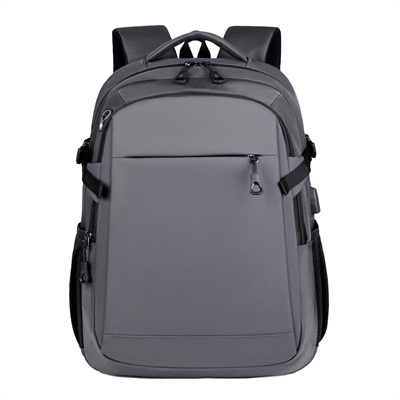
Why Integrated Capacity Matters in Backpack Sourcing
Why do buyers often prioritize backpack suppliers with integrated production capacity? The core reason is that splitting custom development and bulk production between different factories increases communication steps and leads to quality control deviations. Specifically, if the patterns, processes, and materials confirmed during the custom development stage encounter a standards gap upon entering the bulk production phase, it results in color variation, stitching tolerance issues, and delivery delays.
A supplier with integrated capabilities can complete the transition from sample approval to bulk delivery on the same production line, ensuring that technical documentation, quality standards, and packaging specifications remain consistent. For wholesalers, this means more stable quality across repeat orders. For custom buyers, it means design intent is not lost through secondary translation.
Therefore, when evaluating a backpack supplier, the key is not whether it can accept orders, but whether it can take full responsibility for maintaining the same standards throughout the entire process.
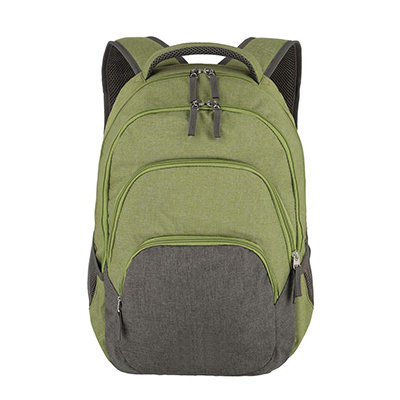
How to Screen Such a Backpack Supplier
When screening a backpack supplier, buyers can evaluate across five verifiable dimensions, confirming each item before moving to price comparison:
1. Customization Capability
Confirm whether the supplier can handle OEM/ODM projects and whether it can process adjustments to patterns, compartments, hardware, and logo techniques. For custom buyers, a supplier's ability to translate original designs into manufacturable products directly affects product differentiation.
2. Sampling Mechanism
Confirm whether the supplier has a dedicated sampling process, whether bulk production starts only after pre-production sample approval, and whether sampling timelines are confirmed in writing. Responsiveness and willingness to revise samples during the sampling stage are important indicators of a supplier's execution efficiency.
3. Quality Control
Confirm whether the supplier has a full-process quality inspection system and whether it can provide testing and compliance documentation for target markets. A stable quality control process is the core basis for wholesalers' repeat-order decisions.
4. Production Capacity and Delivery
Confirm whether production schedules are documented in writing and whether the supplier maintains continuous delivery capability during peak seasons. Written schedules define breach boundaries, while continuous delivery capability determines whether replenishment cycles remain controllable.
5. Compliance Credentials
Confirm whether the supplier holds social responsibility and quality management system certifications, and request certificate information within its validity period. Compliance credentials are a prerequisite for entering certain overseas markets, and buyers should treat them as mandatory thresholds rather than bonus points.
After completing the above verification, buyers can assess the true fulfillment capability of the backpack supplier, which reflects collaboration risk more accurately than a price quotation alone.
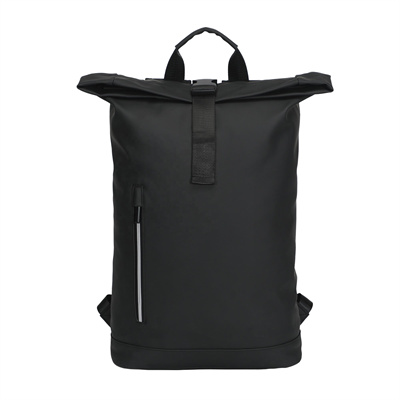
Case Study: What a Qualified Backpack Supplier Looks Like in Practice
Taking Chinese backpack supplier WellPromotion as an example, its business covers original design and bulk manufacturing of backpacks and various types of bags, supporting customized production based on technical documentation provided by buyers.
Relying on its own factory, WellPromotion has an internal coordination process from sampling to mass production, and enters the bulk stage only after pre-production sample confirmation. During bulk execution, a dedicated quality inspection team covers incoming material checks, in-process inspections, and finished product testing. In addition, third-party certification records including ISO 9001, SEDEX, BSCI, and SA 8000 are available for verification.
The above systems and certifications form the foundation of delivery stability. For wholesale clients, the value lies in batch consistency and controllable delivery. For custom clients, the value lies in the seamless continuation of standards from design to mass production.
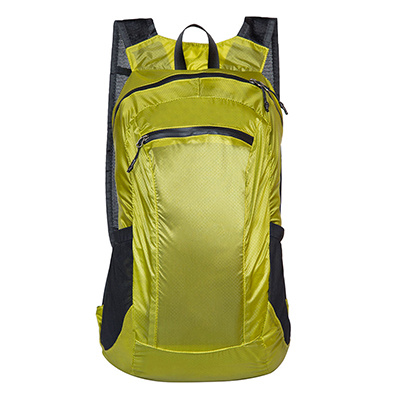
FAQ
Q1: What is the minimum order quantity for custom backpacks?
A1: WellPromotion's standard MOQ is 1,000 pieces per style. For orders using stock fabrics or stock colors, small-batch orders of 500 to 1,000 pieces are accepted. Specific quantities are confirmed in writing during the inquiry stage based on style complexity, fabric sourcing, and customization processes.
Q2: Do you support OEM and ODM?
A2: Yes. WellPromotion handles both OEM and ODM projects. Development can be carried out based on technical files, patterns, or physical samples provided by the buyer. The in-house team can also participate in structural design and sampling translation, covering adjustments to patterns, compartments, hardware, and logo techniques.
Q3: Why choose WellPromotion?
A3: WellPromotion's self-owned production base is located in Anhui Province, an inland manufacturing region where labor and overall production costs offer more flexibility compared to traditional coastal manufacturing hubs. The factory has integrated internal capabilities spanning sampling, mass production, and export order follow-up, making it suitable for running wholesale replenishment and custom development in parallel.
WellPromotion Custom Backpack Supplier From YouTube
Conclusion
Wholesale and customization are not mutually exclusive procurement models, but rather different manifestations of the same supply chain capability at different stages. What buyers truly need to confirm is whether the backpack supplier can carry design standards through to bulk production, embed quality checks into processes, and put delivery commitments in writing. After implementing the above confirmation items, uncertainty in overseas procurement can be significantly reduced through three entry points: integrated capacity, closed-loop sampling, and verifiable certifications.
For actionable next steps, if you are preparing to launch a backpack project, you may send your technical documentation to the WellPromotion sales team, request samples to verify customization capability, and then proceed to bulk cooperation.