English
Views: 705 Author: Isabella Carter Publish Time: 2026-09-16 Origin: WellPromotion Custom Customized Lunch Bags
Lunch bag sourcing typically begins with a preliminary assessment of capacity, color, and price. However, for customization projects, brand clients must consider far more than these surface-level factors. Material composition, bonding techniques between the lining and shell, the durability of closure systems, and the presentation of brand identifiers collectively determine the functional performance and commercial value of customized lunch bags.
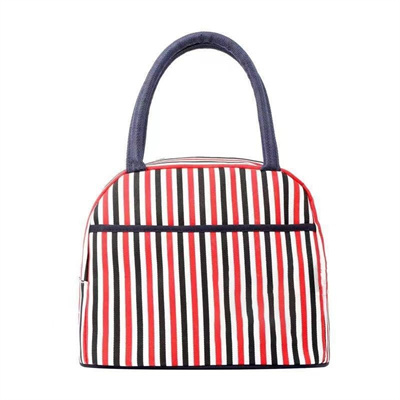
Deconstructing the 3-Layer Structure: Materials That Perform
Customized lunch bags generally consist of three layers: the outer shell, the insulation layer, and the inner lining. Each layer serves distinct functions and should be evaluated separately by the buyer.
The outer shell forms the exterior, primarily providing abrasion resistance, load-bearing capacity, and a substrate for printing. Common materials include polyester, nylon, oxford fabric, recycled polyester, and canvas. Polyester offers cost stability, nylon is lightweight, oxford fabric provides outstanding abrasion resistance, and recycled polyester aligns with sustainable brand positioning.
The insulation layer sits between the shell and the lining to minimize heat transfer. The thickness and density of the foam directly influence the bag’s hand feel, foldability, and thermal retention. Common materials include EPE/EVA, PU, and reflective aluminum film. While aluminum film enhances thermal reflection, it is relatively thin and typically requires lamination with the shell or lining for protection.
The inner lining comes into direct contact with food containers, ice packs, or liquids. It must be leak-resistant, easy to wipe clean, and compliant with food contact safety standards. Common materials include food-grade PE, EVA, TPU, and aluminum foil composites.
Given these functional differences, buyers should request that suppliers clearly specify whether the lining complies with food contact regulations, whether it contains restricted substances, whether the surface supports wipe cleaning, and whether it is removable for washing.
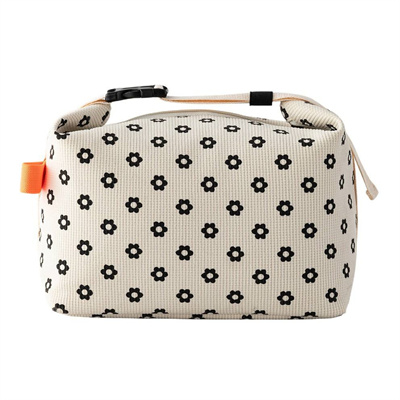
The Anatomy of Leak-Proofing: Seams, Welds, and Liners
The bonding process between the inner lining and outer shell directly determines whether customized lunch bags will suffer from delamination, leakage, blistering, or deformation.
1. Stitched Seams
This method is suitable for canvas, heavy-duty polyester, and bags requiring reinforced handles. Seam areas must be bound or tape-sealed; otherwise, needle holes may create leakage paths.
2. Thermal Lamination
This process bonds aluminum film, foam, and lining through heat and pressure. It yields a smooth interior with minimal seams, making it ideal for ice packs, meal prep bags, and applications requiring frequent wiping. However, improper control of temperature, pressure, or duration can cause delamination, wrinkling, or localized stiffening.
3. Adhesive Bonding Followed by Stitching
This approach balances production efficiency with seam strength. However, the adhesive must comply with food contact standards; otherwise, odors or harmful substance migration may occur inside the bag.
4. Removable Inner Liners
This design inserts the liner as a separate component into the outer bag, allowing for easy removal, cleaning, or replacement. It demands high precision in stitching, molding, and assembly, and is often used for retail and food service brands.
5. Welded Liners
Using hot-air or high-frequency welding, this method creates a seamless, needle-free cavity with superior leak-proof performance. It is suitable for cold-chain logistics, high-humidity environments, and liquid-heavy applications. However, it requires high material compatibility, and not all fabrics can be welded.
When evaluating leak-proof design, buyers must look beyond lining materials alone. Attention should also be paid to bottom corners, zipper openings, seam allowances, and liner edge sealing. Buyers should require suppliers to clearly document the bonding process, bottom construction, corner reinforcement, whether the liner is one-piece molded, and the feasibility of post-damage repairs.
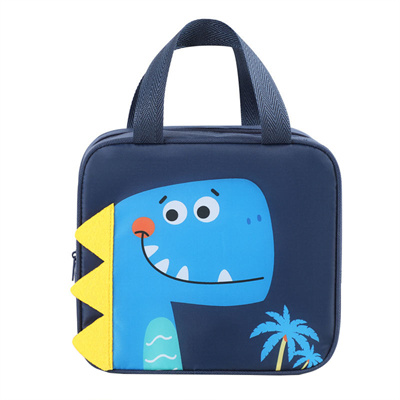
Beyond the Zipper: Choosing Durable Closure Systems
The closure system dictates how customized lunch bags open and close, directly impacting thermal efficiency, leak resistance, and overall service life. Common solutions include:
Zippers, composed of teeth, tape, sliders, stops, and retainer boxes. In low-temperature environments, buyers must verify that zippers operate smoothly without jamming. For food-related applications, the zipper interior should resist dirt accumulation, and slider coatings must be resistant to flaking.
Hook-and-loop fasteners (Velcro), typically made from nylon or polyester. While offering convenient access, they are prone to dust accumulation, snagging, and adhesive degradation over time, making them less suitable for high-frequency daily use.
Magnetic closures, consisting of magnets, metal plates, and encasing materials. They provide a clean aesthetic suitable for retail brands. Buyers must ensure magnets are securely encased and verify that their placement does not interfere with credit cards, electronic devices, or medical implants.
Buckles, usually made from PP or ABS. Commonly used for commuting, outdoor, and children’s lunch bags, they require evaluation for repeated open-close durability, low-temperature performance, and one-handed operability.
Drawstrings, mostly found on lightweight, soft-sided meal bags. They are cost-effective but generally offer inferior sealing and insulation compared to zippers. Flap closures with clips balance aesthetics and quick access but remain dependent on the liner structure for leak-proof performance.
When selecting a closure system, buyers should evaluate the appropriate system by considering the end-user’s age, operational preferences (e.g., one-handed opening), contents (e.g., soups or ice packs), and carrying method (e.g., extended shoulder carry).
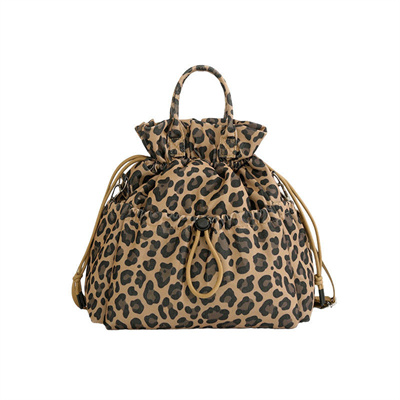
Strategic Branding: Where and How to Place Your Logo
The placement of brand identifiers on customized lunch bags directly affects brand visibility, print quality stability, and long-term logo integrity.
The front panel is ideal for primary logos, offering high visibility at a distance. It suits corporate events, trade shows, and employee gift programs. When the front panel is sufficiently large and flat, it provides a stable substrate for printing or embroidery.
The rear panel aligns with retail and private-label branding. It allows the front to remain visually clean while hosting the brand name, website URL, and compliance information.
Side panels are best for secondary identifiers, batch codes, barcodes, or small graphics. Limited surface area makes them unsuitable for complex gradients or intricate designs.
Front pockets offer secondary brand exposure but must not obstruct the main opening or zipper travel. Logos placed too close to seam lines risk abrasion and cracking over time.
Woven labels and care labels, positioned inside the bag or along side seams, provide space for the brand name, country of origin, material composition, care instructions, and supplier details. Private-label buyers should confirm label dimensions, typography, color, and stitching location in advance.
Zipper pulls, handle buckles, and hangtags allow for subtle branding details that enhance perceived product quality. However, custom hardware extends development lead times and increases minimum order quantities.
Interior printing supports understated branding without affecting exterior aesthetics. If the inner material is textured or uneven, buyers should assess ink adhesion performance.
Buyers should request detailed artwork placement diagrams and physical pre-production samples from suppliers. They must also confirm process-specific pricing and MOQs, ensuring that logo placement does not interfere with insulation layers, zipper operation, or cleaning access.
WellPromotion Custom Customized Lunch Bags From YouTube
Conclusion
In summary, sourcing customized lunch bags requires a systematic approach: first confirming material specifications, then evaluating bonding techniques between the lining and shell, followed by selecting appropriate closure systems and durable components, and finally determining optimal logo placement and application methods.
WellPromotion, as an experienced lunch bag manufacturer, offers all the aforementioned construction and customization options. We assist buyers in mitigating production risks from the design stage onward, ensuring specifications are translated into manufacturable, inspectable, and consistently reproducible products.